
Unfamiliar
In January 2022, my friend Chee came to visit Dubai and suggested, “Let’s go skydiving.” He was surprised when I immediately said yes. Chee is a skydiver himself and was in the process of renewing his skydiving license at the time, and I think he assumed I wouldn’t be brave enough. My quick agreement was unfamiliar to him.
We arrived early to receive instructions and put on our gear. During the preparation, we met the pilot who would be jumping with us, and he explained exactly what to do during the fall. Everything was structured, measured, and rehearsed. From the beginning of the day, I was preparing myself while also struggling to believe that I would actually jump out of a plane. Even though I trusted the pilot and understood the steps, the idea still felt unreal. My mind knew what was supposed to happen, but my body could not yet believe it. The uncanniness of the experience emerged from this gap between intellectual understanding and bodily disbelief, where something familiar suddenly felt strange (Freud, 1955).
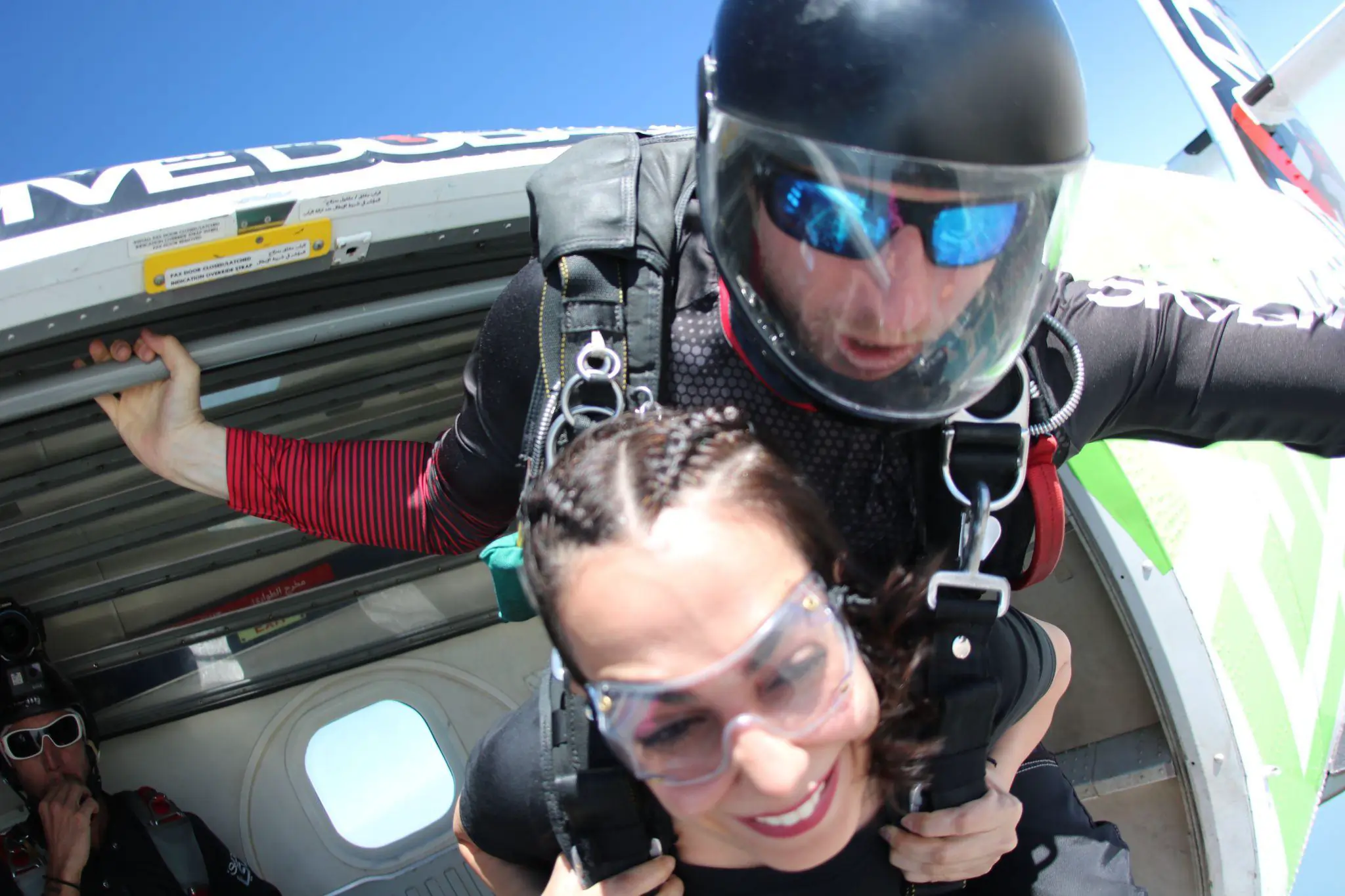
As we walked toward the plane, I felt a mix of excitement and disbelief. At that moment, all my past experiences stopped being enough. Even though I knew what to expect, the instructions no longer helped me feel grounded; they floated past me without settling in my body. I was not particularly scared, which surprised me. Instead of pulling away, I felt drawn forward, as if the unfamiliar was something to enter rather than avoid.

Once we boarded, the plane took off. A camera skydiver introduced herself to me, and before I could fully process what was happening, she jumped out of the plane. Moments later, my pilot followed, and suddenly I found myself in the air.
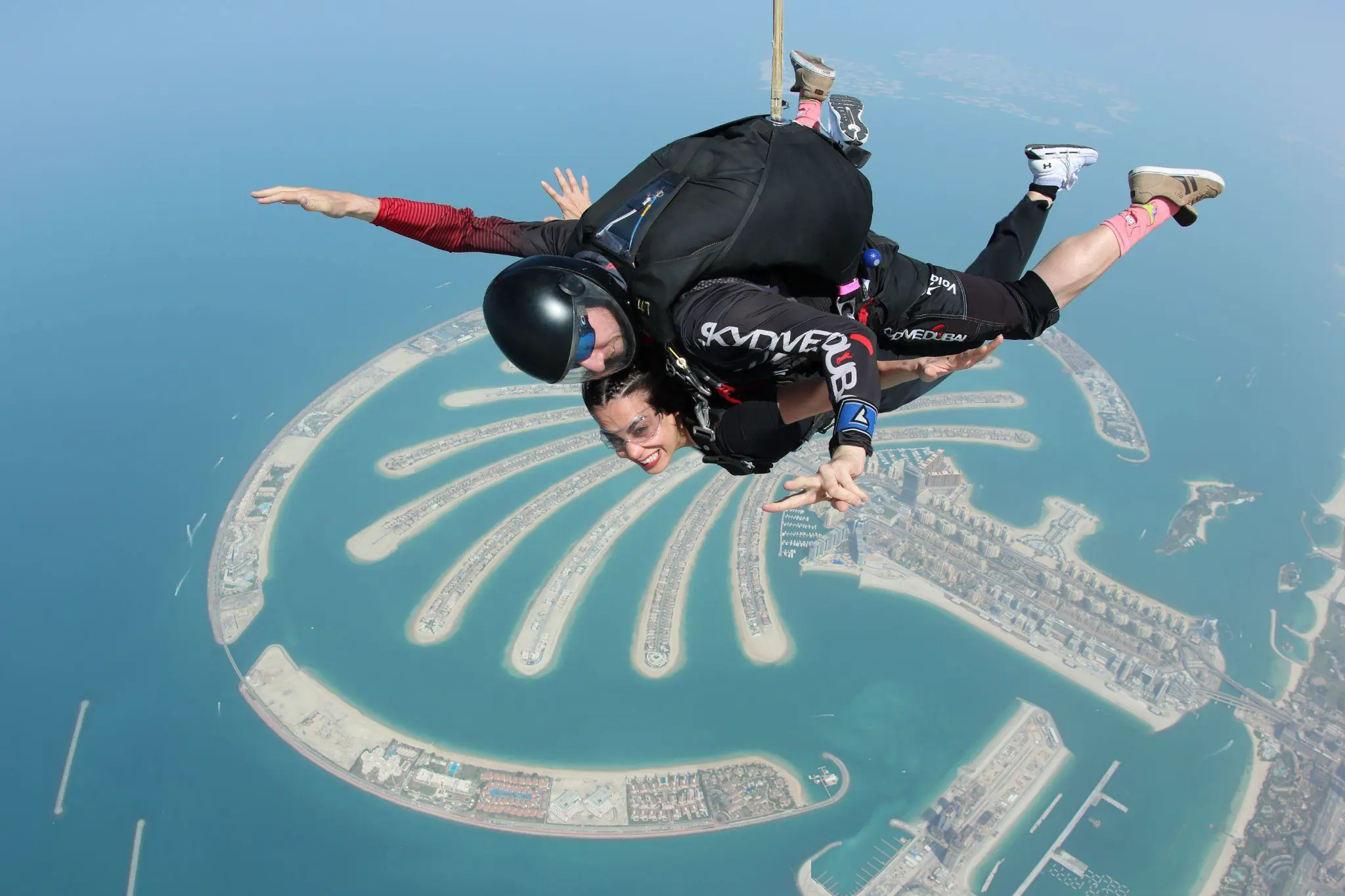
I remembered to lift my legs and open my arms. Everything around me became intensely vivid. I noticed the city below, especially the area where I live, now seen from a vertical perspective that detached me from the ground I usually rely on. From above, the city appeared abstracted and distant, as if my relationship to the place had temporarily dissolved. This sensation echoed the experience of falling described by Hito Steyerl, where the loss of ground produces both visual disorientation and a reconfiguration of perspective (Steyerl, 2011). All the hours of preparation led to a moment that passed in seconds, yet those seconds felt stretched and unreal. Time compressed sharply: long anticipation collapsed into a brief fall that would later reopen and expand in memory, rather than remaining contained within the instant itself (Stewart, On Longing, 1993). In this moment time felt small not because of what I could see but because of how fast it happened. The fall was so quick that it squeezed time into a few seconds. Later in my memory those seconds grew bigger and longer. My body remembered the experience before my eyes could fully understand it.
The moment I left the plane, all instructions disappeared. I felt both fully present and strangely outside myself. As the fall continued, I surrendered my body to the equipment and let it carry me. This surrender was possible because it occurred within a controlled system: a trained pilot, a known landing site, and an experience designed to be repeatable. The air was intense at first, but as we descended, everything became calmer. When we approached the ground, the pilot instructed me to run as our feet touched down, and then it was over. When I met Chee again, he was still in disbelief that I had accepted his offer and gone through with it. Before the jump, peace meant familiarity. After the jump, peace felt grounded and steady, earned through passing briefly through groundlessness.
This experience was nothing like the paragliding I had done before. When I was paragliding, I felt a little confused, but I could still see the ground and understand where I was. I was sitting in a harness, and the fabric wing carried me slowly through the air, moving me across the sky as much as down toward the ground. Everything happened gradually. Skydiving, by contrast, started from very high up, and everything happened so fast that I lost my sense of direction almost right away. I was falling straight down, and I couldn’t tell where I was until I suddenly saw the Palm (my neighborhood) far below me. Seeing it helped my body understand where I was again. In both cases, the sky felt huge and overwhelming, destabilizing orientation before allowing it to reform (Stewart, “What Thought Is Like” 2005), but the way time passed felt very different in each experience.
A second experience, this time in the sea, carried a similar intensity in a very different way. I was visiting a friend who lives on the coast of Abu Dhabi. It was meant to be a relaxed day by the water, shaped by familiarity, friendship and ease. I entered the sea confidently, believing I knew exactly what I was doing. I had my swimming noodle with me, something I carry as a precaution, and I had swum many times before.
Without warning, a strong current caught us. In an instant, everything I thought I knew dissolved. The water resisted my movements, and no matter how much effort I put into swimming, my body remained almost still. Panic set in. My legs shook uncontrollably, my breathing became erratic, and for a moment I believed I might actually die. Unlike skydiving, which began in the unknown but was governed by training and control, this experience started from comfort and familiarity and then abruptly collapsed into something vast, unpredictable, and frightening.
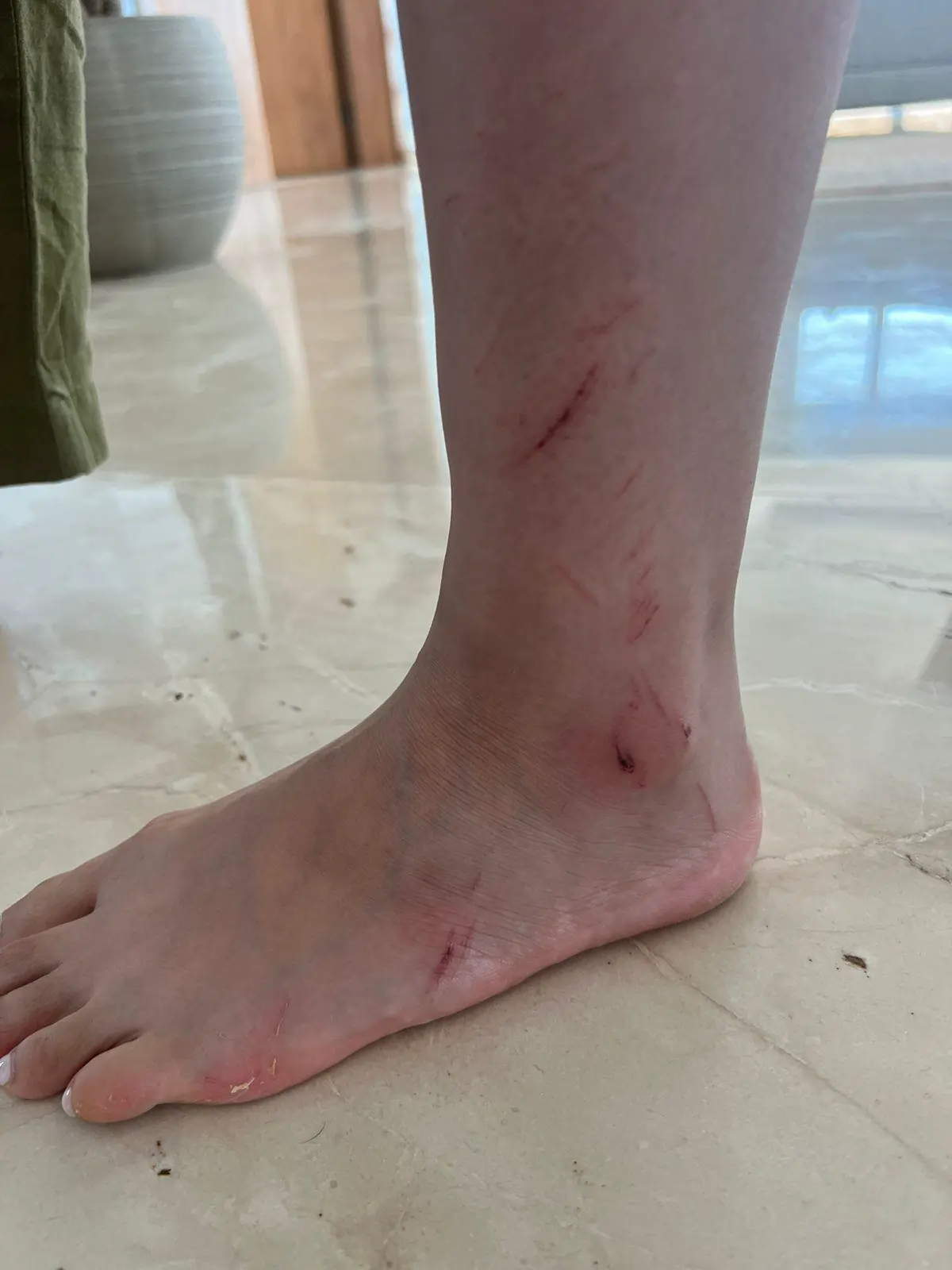
As we were pulled toward the rocks, I tried to anchor myself wherever I could. The surface was covered with barnacles, tiny creatures that were small but very sharp, making the rocks even more dangerous, cutting into my skin as I struggled to grip them. My body was injured and bleeding, no longer clearly separated from the environment that threatened it. In that moment, I felt like my body and the sea were no longer separate, and I realized how fragile and unsafe I was (Kristeva 1982).
Both moments, falling through the sky and being pulled by the sea, brought me to the same place: a loss of orientation that did not end when the events themselves ended. These experiences continued inside memory. In the days that followed, I found myself re-experiencing the sea between sleep and waking, my body instinctively searching for something to hold onto. The vastness of the sky and the sea lingered within me, reshaping my sense of safety, control, and trust. Rather than resolving, these encounters reorganized how I now move through spaces that once felt familiar.
Works cited
Freud, Sigmund. “The Uncanny.” The Standard Edition of the Complete Psychological Works of Sigmund Freud, vol. 17, translated by James Strachey, Hogarth Press, 1955, pp. 217–256.
Kristeva, Julia. Powers of Horror: An Essay on Abjection. Translated by Leon S. Roudiez, Columbia University Press, 1982.
Steyerl, Hito. “In Free Fall: A Thought Experiment on Vertical Perspective.” e-flux Journal, no. 24, 2011.
Stewart, Susan. On Longing: Narratives of the Miniature, the Gigantic, the Souvenir, the Collection. Duke University Press, 1993.
Stewart, Susan. “What Thought Is Like: The Sea and the Sky.” The Open Studio: Essays on Art and Aesthetics, University of Chicago Press, 2005.